
Navigating probate in Florida can be challenging, especially if you are still struggling to find a way to live with the loss of someone you loved. For many individuals, carrying a loved one’s estate through formal administration is their first encounter with the Florida probate process, and even identifying a clear starting point can easily feel overwhelming. A conversation with an experienced Florida probate lawyer may help you to find clarity and identify concrete, actionable steps for you and your family to take as you begin the work of closing out a loved one’s estate. At Loughlin Law, P.A., we have years of experience with Florida probate, and we know that no two families, no two estates, and no two situations are exactly alike. Call us today at 561-559-6214 and set up a time to talk with one of our probate lawyers.
Petition for Administration
The petition for administration is the first essential step to opening probate of a loved one’s estate. However, the petition itself may take some steps to prepare. The Probate Division of the District Court that has “venue” over the deceased individual’s estate (generally speaking, the District Court that has jurisdiction over the county in which the individual was a permanent resident at the time of his or her death) will often provide checklists for family members to use as they prepare the petition for administration.
Selecting the Checklist for Administration
In Florida’s 15th Judicial District, covering Palm Beach County, the checklist must be e-filed along with the petition for administration. The checklist you will need corresponds to the type of administration, which – unless it is already clear that your loved one’s estate is likely to meet the criteria for summary administration to avoid probate proceedings – will generally mean you need either the Petition for Formal Administration of Testate Estate or the Petition for Formal Administration for Intestate Estate. In order to select the appropriate checklist, therefore, you will need to ascertain whether your loved one left a Will.
Determining Whether the Estate is Testate vs. Intestate
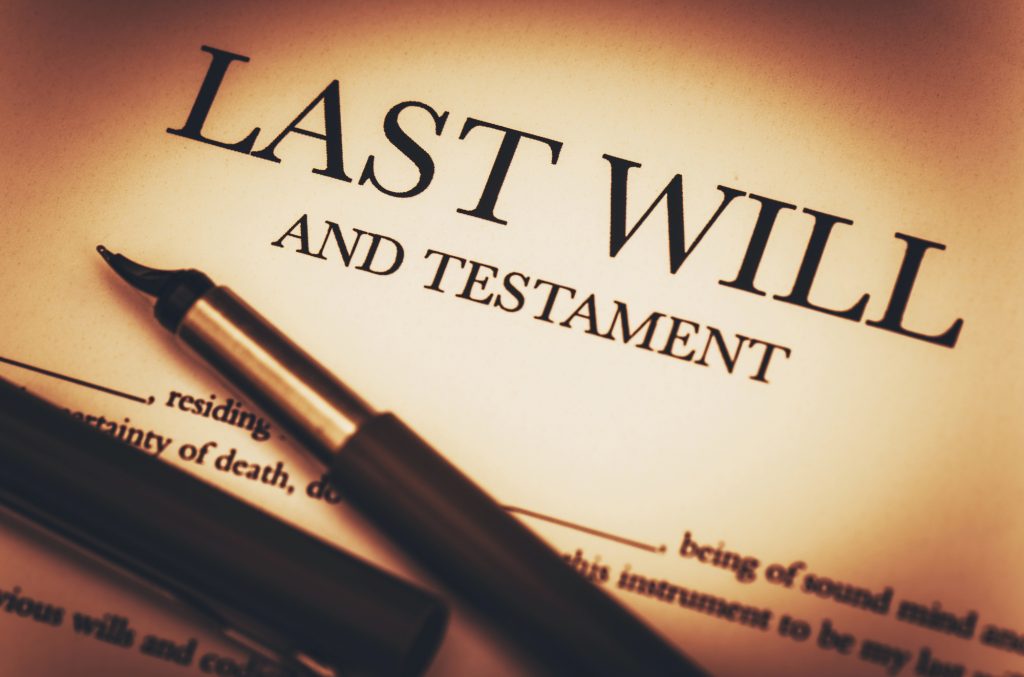
In many cases, individuals inform family members and close friends that they have prepared a Last Will and Testament, although they may not always disclose the details. Ideally, testators will also have communicated with the individuals they nominate as the executors of their estates regarding responsibilities and expectations. Florida law also requires the custodian of a Will to deposit the document with the appropriate court within 10 days of receiving notice that the testator has passed away, so in most cases this stage of preparations for probate in Florida goes smoothly.
Complications can arise, however, when the deceased individual has been for a long time estranged from the family members who are in a position to initiate probate proceedings, or if the custodian of the Will predeceases the testator or is incapacitated at the time of the testator’s death. If you suspect the existence of a Will, but are unsure who is the custodian, you may wish to consult with a probate lawyer.
Validity vs. Availability of a Last Will and Testament
One reason why probate professionals often recommend consulting with an attorney at each major stage of the journey is that a simple lack of familiarity with the Florida probate process can easily lead even the most well-intentioned individuals to make crucial errors. One of these can sometimes appear in the initial determination of whether to file for testate vs. intestate administration. Occasionally it may happen that well-meaning family members, who are certain that the only Will of which they are aware is invalid, or that it does not reflect their loved one’s last known wishes, attempt to file a petition for intestate administration on the basis that the Will does not “count.” This can be a critical mistake; for the purposes of filing the petition, it is the existence of a document purporting to be the decedent’s Last Will and Testament – not the validity of that document – that matters. If you are unsure of whether your loved one’s estate should be considered testate vs. intestate, consider calling Loughlin Law, P.A. to schedule a consultation.
Preparing the Checklist for Administration
The form for the petition itself is not provided because, according to the Palm Beach County Clerk’s office, petitioners must be represented by attorneys in filing the petition for Formal Administration (by contrast to Summary Administration). The checklist itself provides instructions for “pro se” (representing yourself) filing, in recognition of the two exceptions that allow individuals to petition for formal administration without an attorney, pursuant to Rule 5.030, Fla. Prob. R.:
- If the petitioner is also an attorney admitted to practice law in Florida
- If the petition is the sole beneficiary of the estate
Given the complexity of court filings and the lack of familiarity most people have with probate proceedings, you may wish to engage an attorney to assist you with the initial filing, even if you are the only beneficiary of the estate and expect to be able to carry out the remaining steps of the process independently. Any “interested person” is permitted to file the initial petition for administration under Florida § 733.202, but the Florida Bar Association does recommend that non-attorneys always work with a Florida probate lawyer as they move through the process of administering a loved one’s estate.
Probate Factors To Consider as a Personal Representative in Florida
If you have been appointed as the personal representative of a loved one’s estate in Florida, you likely feel the weight of the responsibility with which you have been entrusted. Many personal representatives find the probate process intimidating at first glance, and it can be difficult to know where to begin. Once started, however, probate in Florida generally follows an orderly series of predictable steps. The specifics may vary somewhat depending on the factors present in each unique situation, but the factors to be considered are relatively well-defined, and so typically much of the administrative work of the Florida probate process consists in determining which factors apply at each stage of the process and then following the prescribed procedure based on the answers.
Some of the most commonly encountered factors that can influence Florida probate are:
- Whether the decedent is survived by his or her spouse
- Whether the decedent left behind any minor children
- Whether the decedent left a valid Last Will and Testament
- Whether the decedent’s primary residence was a properly designated homestead property under Florida law
- The types and total value of exempt as well as non-exempt property in the decedent’s estate
- The number and value of any creditors’ claims
Each of these factors can be turned into an algorithm or flowchart of sorts – a series of simple, yes-or-no questions in which each answer conditions the next step in the Florida probate process and conditions the range of questions that follow.
Last Will and Testament
Whether the decedent died testate (leaving behind a valid Last Will and Testament) vs. intestate (without a Will) will influence several elements of probate proceedings. Two of these are especially significant, and one will have an effect almost immediately:
- The appointment of a personal representative of the estate
- The distribution of property after other probate requirements have been met
Understanding how the presence vs. absence of a Will affects probate in Florida in each case may help families and individuals who may be called on to serve as personal representatives to find their bearings early in the Florida probate process.
Appointment of Personal Representative When There Is a Will
Most of the time, an individual who takes the time and trouble to make out a Last Will and Testament and ensure that it meets all the legal requirements for validity in Florida also nominates in their Will someone they wish to serve as the executor of their estate, known in Florida as the personal representative. If a Will is admitted to probate, and a Florida court finds the Will to be valid (also known as “proving” the Will, the legal approval process that gives probate its name), then in most cases the Probate Court will formally appoint the person nominated in the testator’s Will as the personal representative of the estate, and issue Letters of Administration authorizing this person to begin the formal probate process.
Appointment of Personal Representative Without a Will
If there is no Will, or if the person nominated by the testator is unable or unwilling to serve as personal representative, then the Court will instead appoint a personal representative following the order of preference set out in § 733.301, Florida Statutes. The order of preference is “fixed,” under Florida law, meaning it is not in the Court’s discretion to be flexible in this regard; however, prior to appointing a personal representative the Court will first endeavor to ascertain whether the individual listed next on the list meets the criteria for personal representatives established under §§ 733.302-305, which cover basic requirements for, and restrictions on, eligibility for serving as a personal representative in Florida. The Court will proceed down the order of preference until a suitable personal representative is found.
Most of the time, the appointment of the personal representative is a relatively straightforward step in the Florida probate process. However, issues can sometimes arise in cases where the decedent may have been estranged from some of or all of the individuals identified in the order of preference – a circumstance which, besides being uncomfortable both for the individual unexpectedly called on to serve as personal representative and for those who had closer personal relationships with the decedent, can sometimes lead to delays when it is not immediately clear how to reach person legally indicated for the role. A Florida probate lawyer may be able to advise you if you are going through this unusual, but frustrating, situation.
Distribution of Property – Testate
If the decedent left a valid Last Will and Testament, then at the conclusion of the probate process any property remaining in the estate after debts have been settled and final expenses paid will be distributed to beneficiaries, and for the most part this distribution will be carried out by the personal representative in accordance with whatever terms the testator specified in his or her Will. Note, however, that there are at least two conditions which can supersede the terms of the Will in ordering the disposition of property:
- The elective share of the surviving spouse
- The inheritance rights of minor children
Consider speaking with a Florida probate lawyer to discuss how these may apply, especially if your loved one left minor children who must be cared for.
Distribution of Property – Intestate
Earlier stages of formal probate in Florida, such as the notice to creditors and the payment of the decedent’s final expenses, will follow a generally similar formula regardless of whether the decedent left behind a Will. Once the time comes to dispose of property remaining after all accounts have been settled, however, in the absence of a Will the distribution of assets must be made according to a strict hierarchy set out in §§ 732.101-111, Florida Statutes. Unlike the terms of a Will, this hierarchy cannot be superseded by either the claims of minor children or those of a surviving spouse – this is, however, largely due to the fact that these claims are accounted for and prioritized in the structure of Florida’s intestacy laws.
Exempt Property
There are a few reasons why it is important to accurately identify non-probate property early in the Florida probate process. One of these, of course, is that non-probate assets can generally be transferred directly to the appropriate beneficiaries, without needing to wait on the administration of the rest of the estate. Two other reasons that individuals unfamiliar with probate in Florida may sometimes overlook are:
- Notice of Administration: The personal representative is responsible for serving a formal Notice of Administration not only on the decedent’s surviving spouse and any beneficiaries named in the Will, but also on anyone who may have a claim on a share of property that is exempt from probate. Even though exempt property will not be handled through estate administration in the same way as probate property, probate cannot go forward without first determining whether the decedent left any property that should be considered exempt from probate so that the exempt property can be otherwise distributed.
- Summary Administration: Estates whose total value comes to less than $75,000 may be able to avoid probate, at least in the sense of the formal Florida probate process. Assets exempt from probate do not normally count toward the estate’s value in these calculations, so accurately identifying exempt property early in the probate process can sometimes simplify that process considerably by making it possible to petition for summary administration.
Sometimes the probate exemptions for specific types of property will be immediately obvious; other instances may be less straightforward. If at any point you are unsure of whether a loved one’s property may qualify to avoid probate, consider speaking with a probate lawyer in your area regarding the specifics of your situation.
Probate Exemptions in Florida
One element of Florida probate considerations that can sometimes frustrate personal representatives is that, although we often refer to “exempt property,” in fact Florida offers more than one way for property to avoid probate. Specific assets may be exempt from one aspect of the probate process, but not another.
Briefly, the types of exemptions most often seen in Florida probate cases include:
- Probate tax exemptions: Florida does not impose its own estate tax, but when the value of a decedent’s “gross estate,” as defined by the Internal Revenue Service (IRS) exceeds the federal threshold for the year of the individual’s death, then the federal estate tax may apply. Additionally, if the individual owes state or federal income tax for the year in which he or she died, then those taxes must normally be paid out of the estate as part of the final administration process. Some assets that are exempt from probate in other respects, such as certain assets held in trusts, may not be exempt from all tax obligations.
- Exemptions from creditors’ claims: Typically a decedent’s primary residence that has been duly recognized as a “homestead” property under Florida law will be exempt from creditors’ claims, but will also be subject to certain restrictions on how it may be “devised” (disposed via Will). Up to $20,000 in household furnishings may also be exempt from creditors’ claims (very important if other family members are continuing to live in the home that was formerly the decedent’s primary residence); sometimes the Will may direct a specific distribution of personal property of this type once the time comes to make a final disposition of assets. Two personal transportation vehicles, subject to certain limitations on gross weight, may also be exempted from the effects of creditors’ claims in most cases.
- Exemptions from administration: A few types of property, such as the funds held in financial accounts with payable-on-death or transfer-on-death beneficiary designations, may pass directly to the individuals named on those accounts when they present the relevant financial institution with the required documentation (generally set by the institution) in each case. An attorney familiar with Florida’s probate laws may be able to help you identify any assets that qualify to avoid probate.
- Statutory exemptions: The death benefits paid to school employees pursuant to Florida § 112.1915, as well as assets held in certain types of college tuition trusts under terms established by state and federal laws, are subject to certain statutory exemptions during probate. These exemptions primarily serve to protect the covered assets from creditors’ claims in the event that the estate is burdened with substantial debt.
Assets held in trusts may be exempt from probate, depending on how the trust is set up; the requirements that apply to trusts during estate administration can be complex, so if your loved one left a trust of any kind it may be wise to consult with a Florida probate lawyer.
Required Notices in the Florida Probate Process
There are two types of notices that the personal representative must typically manage during formal administration probate in Florida. The first of these is the Notice of Administration, served formally on the decedent’s surviving spouse (if any), the beneficiaries identified in the decedent’s Last Will and Testament, and persons who may be entitled to any property that meets the criteria for avoiding probate in Florida. In certain circumstances, the trustees and beneficiaries of a trust established by the decedent may also be entitled to formal notice.
The second type of notice is the Notice to Creditors, published in a newspaper in the same county as the probate proceedings. The notice is published so that creditors who may not be known to the personal representative have the opportunity to submit their claims and receive payment for them. The resolution of outstanding debts can be one of the lengthier stages of probate in Florida, as § 733.705, Florida Statutes establishes timelines for both the payment of claims and the filing of objections to claims that can take several months, and many of the time limits are themselves subject to “good cause,” granted at the discretion of the Court overseeing the administration. Once claims are resolved, however, the personal representative can usually proceed with the disposition of property as directed in the decedent’s Will (in testate administration), subject to the “special provisions” delineated in Florida §§ 733.801-817. If formal administration is proceeding under the rules of intestate succession, then those will take the place of the Will in governing the distribution of assets prior to closing the estate.
Talk to a Florida Probate Lawyer
Getting started on probate in Florida can be challenging. In most cases, however, once the initial steps are out of the way the rest of the Florida probate process generally follows an orderly progression. Consulting with a probate lawyer before you initiate the process by petitioning for administration can help, as can checking in to get an experienced attorney’s advice when perplexing questions arise along the way. Reach out to Loughlin Law, P.A. today at 561-559-6214.
Are you a realtor navigating probate-related property sales? Download our specialized Florida Probate Guide for Realtors for tailored insights.
